How to Measure Your Blood Pressure Correctly at Home
Simple, step-by-step tips to get accurate blood pressure readings at home, from posture to cuff placement to timing.
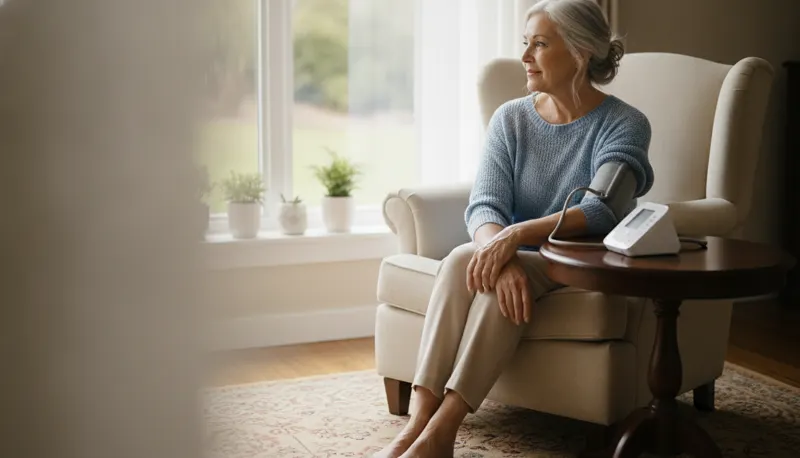
Checking your blood pressure at home is one of the most helpful things you can do for your heart. It shows your doctor how your numbers behave in real life, not just during a rushed office visit.
But small details can change the result more than you might expect. Crossed legs, a full bladder, or a cuff that is the wrong size can all push the numbers up. Here is how to get readings you can trust.
Why home readings are so useful
Blood pressure goes up and down throughout the day. A single reading at the doctor's office is only one snapshot.
The National Heart, Lung, and Blood Institute notes that readings taken outside the office can help confirm a diagnosis and show how well your blood pressure is controlled over time.
Choosing and checking your monitor
Most doctors recommend a monitor with a cuff that wraps around the upper arm. Wrist and finger monitors tend to be less reliable for most people.
The most important detail is cuff size. A cuff that is too small can make your numbers read too high, and one that is too large can make them read too low. Measure around the middle of your upper arm and compare it to the size range printed on the cuff.
It is a good idea to bring your monitor to your next appointment. Your doctor or nurse can compare it with their own equipment and watch you use it.
Before you measure
A little preparation makes a big difference. In the 30 minutes before a reading, try to avoid:
- Caffeine, such as coffee, black tea, or cola.
- Exercise or hurrying around the house.
- Smoking.
- A large meal.
Also, use the bathroom first. A full bladder can raise your reading.
Sit the right way
How you sit matters as much as the monitor itself. Follow these steps every time:
- Sit in a chair with a back, not on a sofa you sink into or on the edge of the bed.
- Keep your back supported against the chair.
- Put both feet flat on the floor. Do not cross your legs or ankles.
- Rest your arm on a table so the cuff is at about the level of your heart.
- Let your palm face up and keep your arm relaxed.
Then sit quietly for five minutes before you press the button. This rest time lets your body settle.
Put the cuff on correctly
Place the cuff on bare skin, not over a sleeve. If a sleeve is rolled up tightly, it can squeeze your arm and affect the reading.
The bottom edge of the cuff should sit about an inch above the bend of your elbow. It should be snug but not tight. You should be able to slip one or two fingertips under it.
Many cuffs have an arrow or mark that should line up with the artery on the inside of your arm. Check the instructions that came with your monitor.
During the reading
Stay still and do not talk. Talking, laughing, or even watching an exciting show can nudge your numbers up.
When the first reading is done, wait about one minute and take a second reading. Write both down. Some doctors ask for the average of the two.
If the two readings are very different, rest a few more minutes and take a third.
When and how often
Try to measure at the same times each day. Many people find it easy to check once in the morning, before breakfast and before any medicine, and once in the evening.
Your doctor may ask you to do this for a week before a visit, or on a different schedule. Follow the plan your doctor gives you.
Keep a simple log
A clear record is what makes home readings valuable. For each reading, write down:
- The date and time.
- Both numbers, such as 132/84.
- Which arm you used.
- Anything unusual, like poor sleep, pain, or a stressful morning.
Paper works just fine. So does the notes app on your phone. Some monitors also store readings for you.
Understanding what you see
According to Harvard Health, a normal reading is below 120 over below 80. Readings of 130/80 and above fall into the high blood pressure range.
Try not to react to a single number. Look at the pattern over several days. That pattern is what your doctor will want to see.
The World Health Organization points out that many people with high blood pressure do not know they have it. Regular home checks are a simple way to stay informed.
When to talk to your doctor
Share your log with your doctor at every visit, and call sooner if your readings are often 130/80 or higher, or if they suddenly change. Ask your doctor what your personal target should be.
If a reading is above 180/120, rest for five minutes and measure again. If it is still that high, contact your doctor right away. If you also have chest pain, shortness of breath, back pain, numbness, weakness, vision changes, or trouble speaking, call 911.